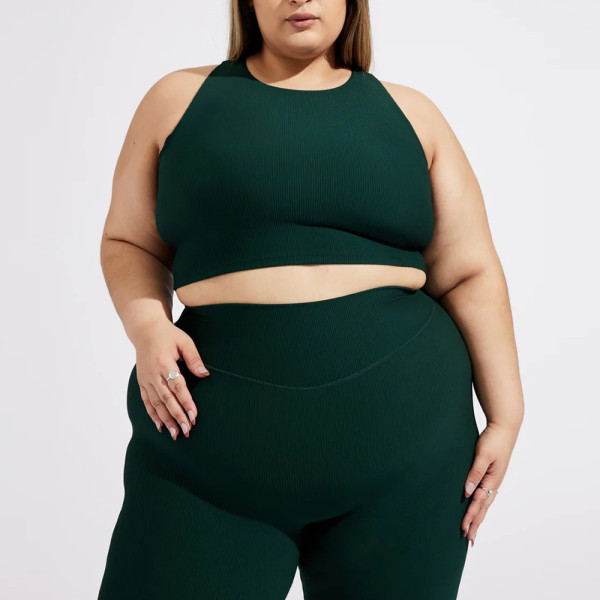
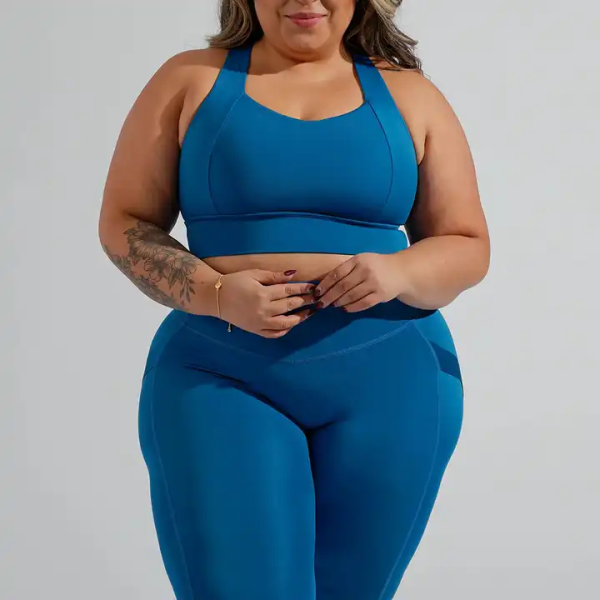
4.1 Building the Full-Size Spec Sheet & Pattern Strategy
We aligned on three fundamentals first: target customer, use scenario, and fit style (high-waist vs mid-waist, compression level, preferred inseam, and rise/crotch feel).
Then we built a complete size spec sheet and treated plus-size risk points as dedicated control items:
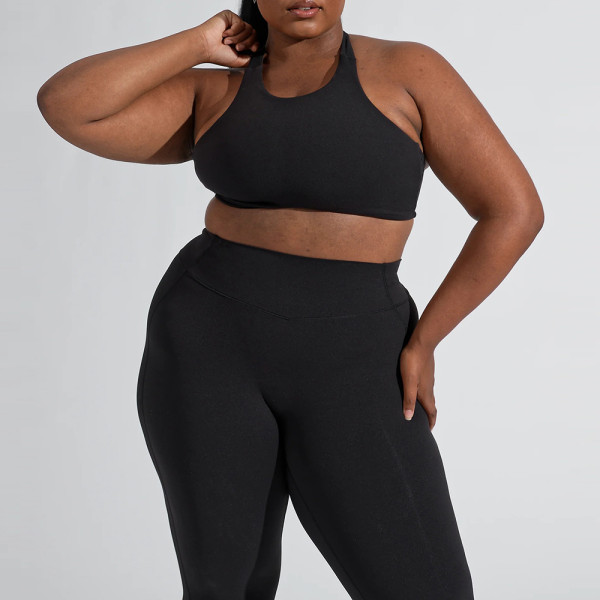
-waistband height + elastic rebound control
-hip and thigh tension curve
-crotch depth + front/back rise ratio
-squat-proof and opacity evaluation under stretch
4.2 Two-Round Fit Testing to Reduce Trial-and-Error
We used a faster, more controlled sampling rhythm:
Round 1: Fit skeleton approval (back-waist stability, crotch comfort, thigh pressure)
Round 2: Detail + mass-production readiness (waist construction, seam placement, stitch tension, topstitch and elastic control)
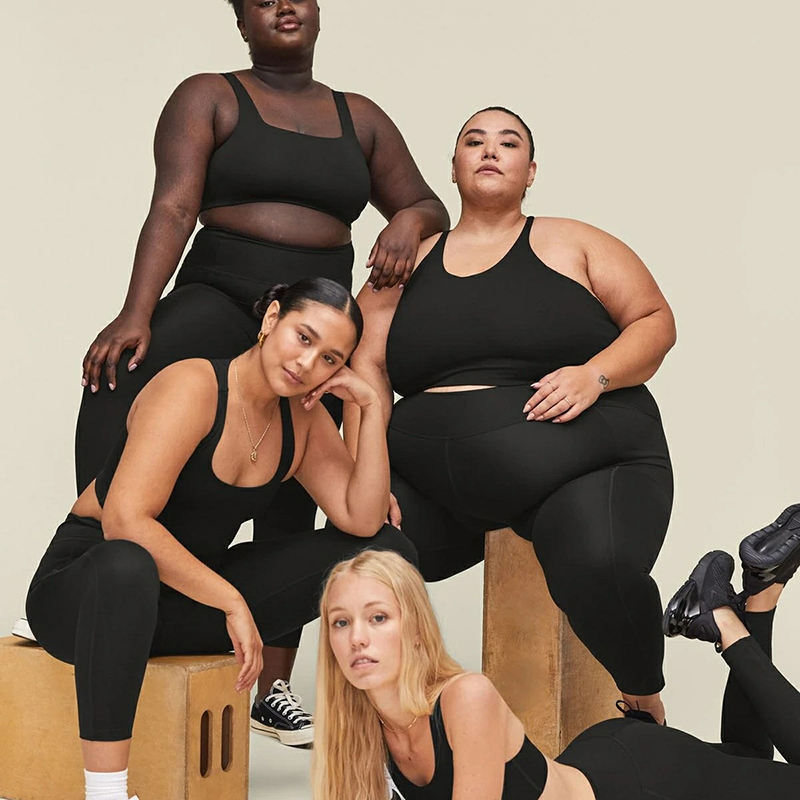
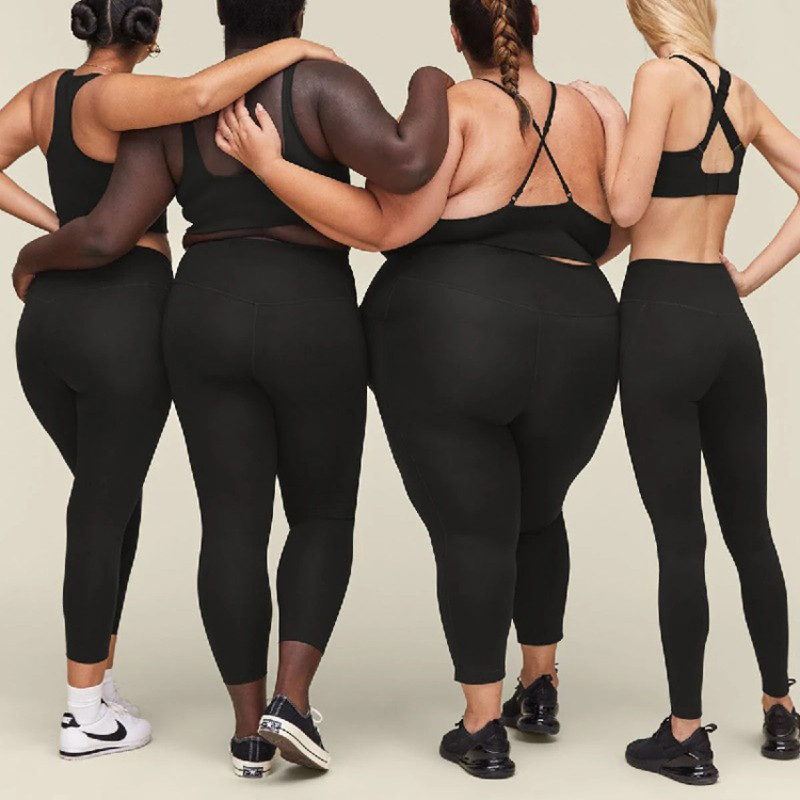
This ensured plus sizes fit correctly while standard sizes kept the same clean silhouette and premium look.
4.3 Fabric & Construction Optimization (Plus Size ≠ Just “Thicker Fabric”)
Based on the customer’s chosen fabric direction, we optimized for real wear performance:
-verified stretch recovery and opacity targets without changing the hand-feel
-adjusted waistband structure and stitch tension to reduce rolling/slipping
-reinforced high-friction areas (inner thigh, crotch) with durability-focused stitch settings
-delivered production standards: stitch density, seam allowance, elastic stretch ratio, and critical measurement tolerances
4.4 Bulk Production Delivery: Making It Repeatable
To prevent “great sample, inconsistent bulk,” we executed:
-key size inspections (e.g., M / XL / 3XL as representative checkpoints)
-feedback loop after delivery for continuous improvement in next runs
-labeling and packaging alignment (size labels, care labels, hangtags) to match the brand’s system and reduce fulfillment errors